We use cookies to make your experience better. To comply with the new e-Privacy directive, we need to ask for your consent to set the cookies. Learn more.

 Download a PDF for this medication
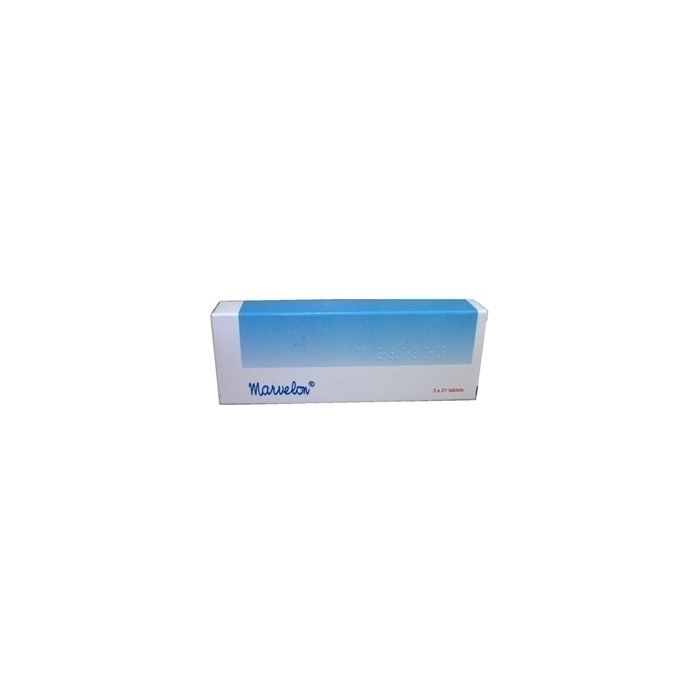
Marvelon tablets 3 x 21 tablets
Marvelon tablets are a type of hormonal contraception commonly known as 'the pill' or combined oral contraceptive pill. Marvelon tablets contain two active ingredients, ethinylestradiol and desogestrel. These are synthetic versions of the naturally occurring female sex hormones, oestrogen and progesterone that are produced by the body.
The hormones taken in the pill work mainly by tricking your body into thinking that ovulation has already happened. This prevents an egg from ripening and being released from the ovaries each month.
The hormones also increase the thickness of the natural mucus at the neck of the womb, which makes it more difficult for sperm to cross from the vagina into the womb and reach an egg. They also change the quality of the womb lining (endometrium), making it less likely that a fertilised egg can implant there.
Oral contraceptive pill used to prevent the release of an egg and to reduce the chances of getting pregnant.
Adverse Reactions
Various adverse reactions have been associated with oral contraceptive use. The serious reactions are dealt with in more detail. The first appearance of symptoms indicative of any one of these reactions necessitates immediate cessation of oral contraceptive use while appropriate diagnostic and therapeutic measures are undertaken.
• Serious adverse reactions
Some epidemiological studies have suggested an association between the use of COCs and an increased risk of arterial and venous thrombotic and thromboembolic diseases such as myocardial infarction, stroke, deep venous thrombosis, and pulmonary embolism. These events occur rarely.
Thrombosis has very rarely been reported to occur in other veins or arteries, e.g. hepatic, mesenteric, renal or retinal, in COC users. There is no consensus as to whether the occurrence of these events is associated with the use of COCs.
The use of estrogen-containing oral contraceptives may promote growth of existing sex steroid dependent tumours. For this reason, the use of these oral contraceptives in patients with such tumours is contraindicated.
The possible increase in risk of breast cancer should be discussed with the user and weighed against the benefits of COCs taking into account the evidence that they offer substantial protection against the risk of developing certain other cancers (e.g. ovarian and endometrial cancer).
See also section 4.4 Special warnings and special precautions for use; The Pill and Thrombosis, and The Pill and Cancer.
The use of oral contraceptives may sometimes lead to the development of cholestatic jaundice or cholelithiasis.
On rare occasions the use of oral contraceptives may trigger or reactivate systemic lupus erythematosus.
A further rare complication of oral contraceptive use is the occurrence of Sydenhams´ chorea which can be reversed by discontinuing the pill. The majority of cases of oral-contraceptive-induced chorea show a pre-existing predisposition which often relates to acute rheumatism.
• Other Adverse Reactions
- Cardiovascular system
rise of blood pressure. If hypertension develops, treatment should be discontinued.
- Genital tract
intermenstrual bleeding, post-medication amenorrhoea, changes in cervical secretion, increase in size of uterine fibromyomata, aggravation of endometriosis and certain vaginal infections, e.g. candidiasis
- Breast
tenderness, pain, enlargement, secretion.
- Gastro-intestinal tract
nausea, vomiting, cholelithiasis, cholestatic jaundice.
- Skin
erythema nodosum, rash, chloasma
- Eyes
discomfort of the cornea if contact lenses are used.
- CNS
headache, migraine, mood changes, depression.
- Metabolic
fluid retention, change in body weight, reduced glucose tolerance.
Various adverse reactions have been associated with oral contraceptive use. The serious reactions are dealt with in more detail. The first appearance of symptoms indicative of any one of these reactions necessitates immediate cessation of oral contraceptive use while appropriate diagnostic and therapeutic measures are undertaken.
• Serious adverse reactions
Some epidemiological studies have suggested an association between the use of COCs and an increased risk of arterial and venous thrombotic and thromboembolic diseases such as myocardial infarction, stroke, deep venous thrombosis, and pulmonary embolism. These events occur rarely.
Thrombosis has very rarely been reported to occur in other veins or arteries, e.g. hepatic, mesenteric, renal or retinal, in COC users. There is no consensus as to whether the occurrence of these events is associated with the use of COCs.
The use of estrogen-containing oral contraceptives may promote growth of existing sex steroid dependent tumours. For this reason, the use of these oral contraceptives in patients with such tumours is contraindicated.
The possible increase in risk of breast cancer should be discussed with the user and weighed against the benefits of COCs taking into account the evidence that they offer substantial protection against the risk of developing certain other cancers (e.g. ovarian and endometrial cancer).
See also section 4.4 Special warnings and special precautions for use; The Pill and Thrombosis, and The Pill and Cancer.
The use of oral contraceptives may sometimes lead to the development of cholestatic jaundice or cholelithiasis.
On rare occasions the use of oral contraceptives may trigger or reactivate systemic lupus erythematosus.
A further rare complication of oral contraceptive use is the occurrence of Sydenhams´ chorea which can be reversed by discontinuing the pill. The majority of cases of oral-contraceptive-induced chorea show a pre-existing predisposition which often relates to acute rheumatism.
• Other Adverse Reactions
- Cardiovascular system
rise of blood pressure. If hypertension develops, treatment should be discontinued.
- Genital tract
intermenstrual bleeding, post-medication amenorrhoea, changes in cervical secretion, increase in size of uterine fibromyomata, aggravation of endometriosis and certain vaginal infections, e.g. candidiasis
- Breast
tenderness, pain, enlargement, secretion.
- Gastro-intestinal tract
nausea, vomiting, cholelithiasis, cholestatic jaundice.
- Skin
erythema nodosum, rash, chloasma
- Eyes
discomfort of the cornea if contact lenses are used.
- CNS
headache, migraine, mood changes, depression.
- Metabolic
fluid retention, change in body weight, reduced glucose tolerance.
Do not store above 25°C. Store blisters in the original pouches.
Availability: In stock
SKU
Marvelon.